
How to stay safe from job scams and fake resume writers
I guess you've made it when you become worth impersonating?
Public service announcement: A fake recruiter is trying to defraud job seekers by referring them to a resume writer purporting to be me. The job seekers receive an unsolicited email from a fake recruiter named Dawn Alexander or Dawn Hamilton. Dawn notifies them about a job opening. Dawn then recommends that they spruce up their resume and refers them to clinchy.jennifer@gmail.com.
The problem? That’s not my email address. And I don’t know a recruiter named Dawn. I learned about this scam from a savvy person who got suspicious and messaged me directly on LinkedIn. Another prospective client contacted me directly through my website as a wise due diligence step.
It's awful that scammers are taking advantage of desperate job seekers in a tough hiring market. Here are some tips to stay safe from hiring scams:
1. Be extra wary of unsolicited communications, especially if you have the “Open to Work” halo active on your LinkedIn profile picture. That halo tells your network you’re open to new opportunities, but it is also a Bat Signal for scammers claiming to have the perfect job for you.
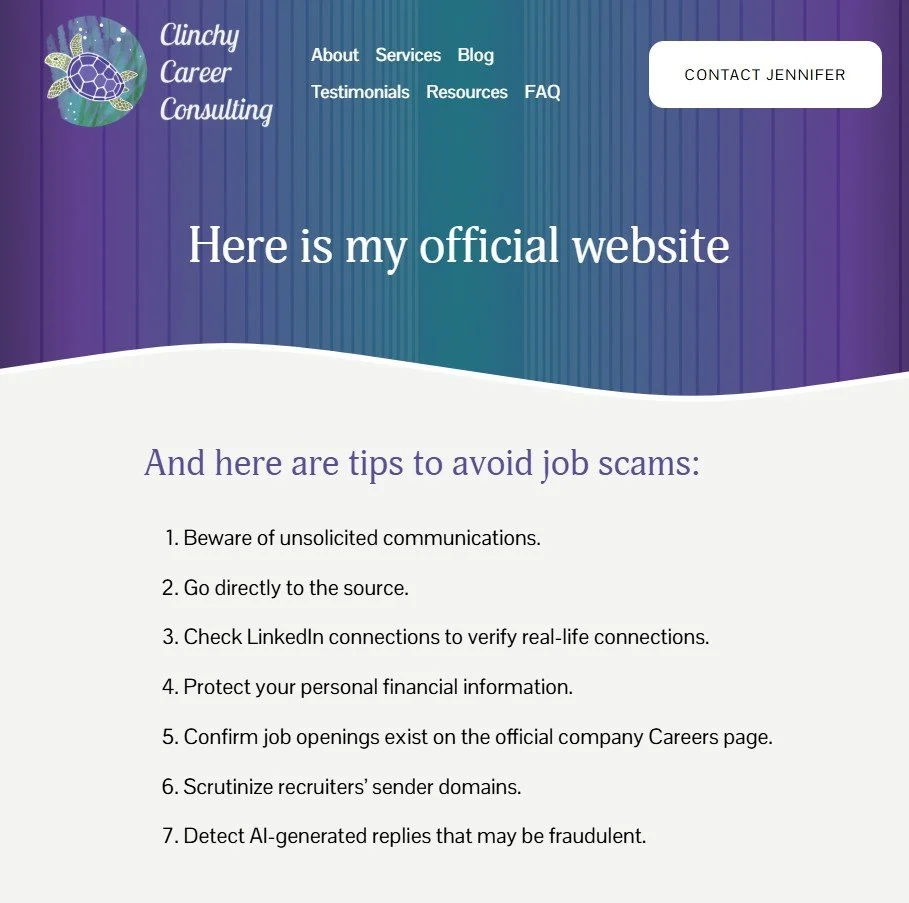
2. When seeking a resume writer or career coach, search for them online and contact them directly through their website. My website is clinchyconsulting.com. It’s the safest way to reach the real me. It looks like what you see below.
3. If a recruiter or contact tries to refer you to someone, check their LinkedIn connections to see if they are actually connected. Most of my new clients are referrals. You can verify that I worked with the person who referred you to me by confirming that we’re connected on LinkedIn.
4. Beware of requests for payment. I accept order placement directly through my website. If someone asks you for bank account information, it is a scam.
5. When you hear about a job opening, go to the company’s official “Careers” webpage to confirm that the opening really exists.
6. If a recruiter claims to represent a company, scrutinize their sender domain. Try to verify that they’re actually employed at the company by searching on LinkedIn or the company’s employee list, if it’s public.
6. Detect AI-generated replies by watching for vague, generic feedback about your resume. When I respond to client inquiries, I provide specific recommendations tailored to each individual’s resume and career situation.
If you’ve received correspondence from Dawn or have a fraudulent report you’d like to share so I can report it and protect others from this scam, please contact me. You can find more information about common job scams at https://consumer.ftc.gov/articles/job-scams. Stay safe out there.